

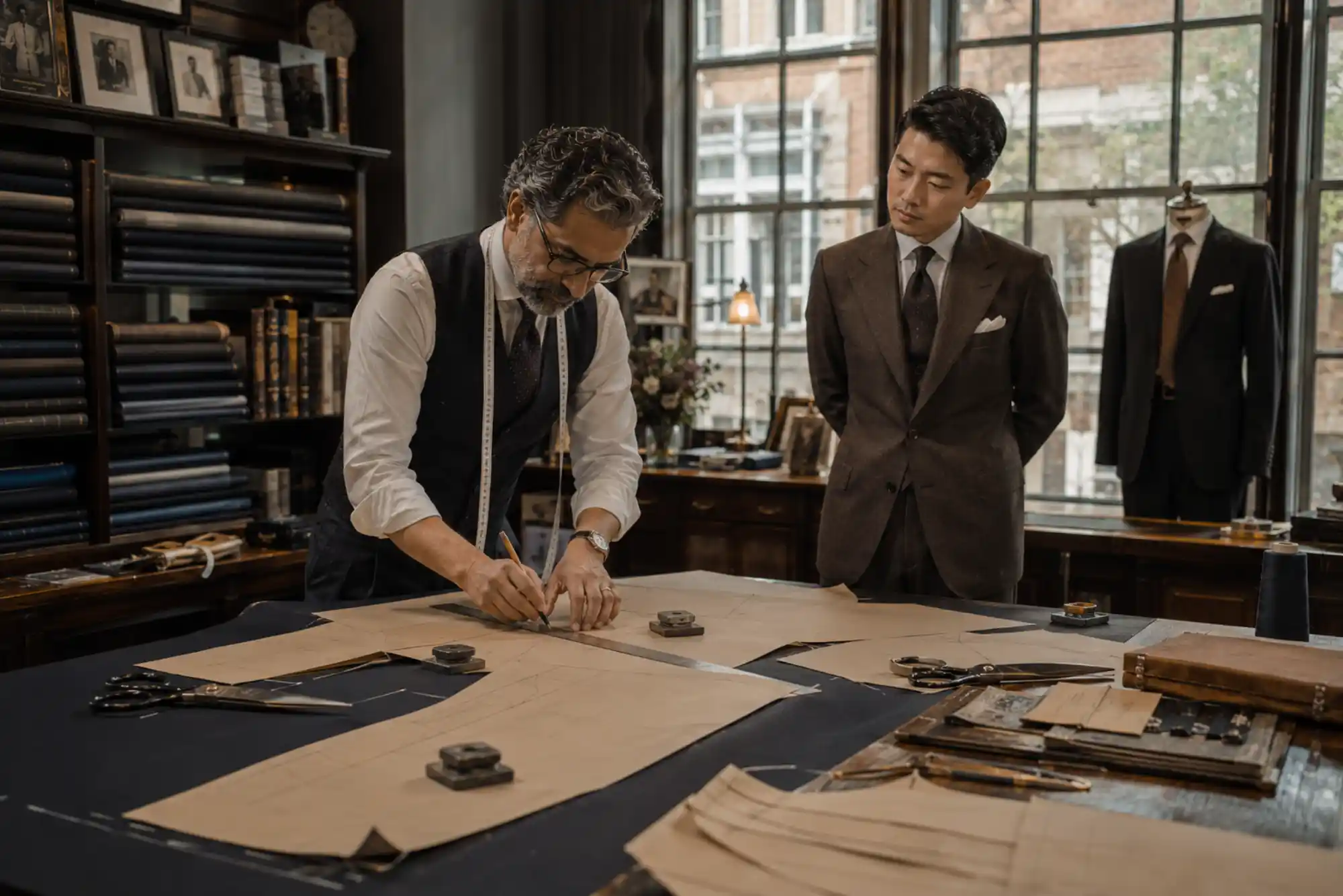
Choosing a bespoke tailor is one of the most important decisions a gentleman can make when investing in tailored clothing. A well-made suit can elevate professional appearance, improve confidence, and provide years of reliable wear. However, the quality of the finished garment depends heavily on the expertise, craftsmanship, and attention to detail of the tailor creating it.
In an era where countless tailoring services claim to offer personalised garments, understanding what separates a genuine bespoke tailor from other tailoring providers is essential. Whether you’re commissioning your first tailored suit or expanding an existing wardrobe, selecting the right tailoring partner can make all the difference.
A bespoke tailoring relationship often extends far beyond a single garment. Many clients work with the same tailor for years, refining patterns and building a wardrobe designed around their individual lifestyle and preferences.
What Does a Bespoke Tailor Do?
A bespoke tailor creates garments that are designed specifically for an individual client. Unlike standard retail clothing or basic alterations, bespoke tailoring begins with a completely unique pattern drafted according to the wearer’s measurements, posture, proportions, and styling preferences.
The process focuses on creating clothing that fits naturally while reflecting the client’s personal taste.
A bespoke tailor typically manages:
- Client consultations.
- Measurement sessions.
- Pattern drafting.
- Fabric recommendations.
- Fittings and adjustments.
- Garment refinement and finishing.
The result is a garment that offers a level of individuality and precision that standard sizing cannot achieve.
Why Bespoke Tailoring Remains Relevant Today
Despite advances in clothing manufacturing, bespoke tailoring continues to attract clients who value quality, fit, and craftsmanship.
Modern consumers increasingly seek garments that provide:
- Long-term durability.
- Superior comfort.
- Personal style expression.
- Professional presentation.
- Greater sustainability through longevity.
- Improved overall fit.
These advantages explain why many individuals choose a bespoke suit over mass-produced alternatives.
The Difference Between Bespoke and Made-to-Measure
One of the most common areas of confusion involves the distinction between bespoke tailoring and made-to-measure services.
While both approaches offer greater personalisation than ready-to-wear clothing, they differ significantly in their construction methods.
Made-to-measure garments modify an existing pattern according to a client’s measurements. Bespoke tailoring, however, begins with a completely original pattern created specifically for the individual.
Clients comparing tailoring options often explore custom made suits before deciding whether full bespoke tailoring aligns with their goals and budget.
Qualities to Look for in a Bespoke Tailor
Not all tailoring services operate to the same standards. Selecting the right tailor requires evaluating several important factors.
Experience and Expertise
Tailoring is a skill developed over many years. Experienced tailors often possess a deeper understanding of garment balance, body proportions, and construction techniques.
Attention to Detail
Precision is essential throughout the bespoke process. Small details such as shoulder balance, sleeve pitch, and jacket drape can significantly influence the final result.
Communication Skills
A good tailor listens carefully to client requirements while offering informed guidance based on experience and technical knowledge.
Commitment to Fit
Fit remains the foundation of successful tailoring. The best bespoke tailors dedicate substantial time to measurements, fittings, and garment refinement.
Understanding the Bespoke Tailoring Process
Although individual approaches vary, most bespoke tailors follow a similar process.
Initial Consultation
The consultation establishes the client’s objectives and preferences. Discussions typically cover fabric choices, intended use, style preferences, and wardrobe requirements.
Measurement Session
Detailed measurements are taken to create a personalised pattern. Posture, stance, and body asymmetries are carefully assessed.
Pattern Drafting
A unique paper pattern is created specifically for the client. This pattern becomes the blueprint for the garment.
Fittings
Multiple fittings allow the tailor to refine the garment and ensure the desired fit and comfort are achieved.
Final Delivery
The completed garment is delivered after all necessary adjustments have been incorporated.
How Bespoke Tailors Help Build a Personal Wardrobe
A skilled tailor does more than create individual garments. They help clients develop wardrobes that support professional, social, and formal requirements.
Common tailored wardrobe pieces include:
- Business suits.
- Wedding attire.
- Formalwear.
- Sport coats.
- Trousers.
- Tailored outerwear.
Many clients begin with a single suit before gradually expanding their collection based on changing needs and lifestyle demands.
Those seeking a wider understanding of London’s tailoring options may also find our guide to tailor made London services helpful.
The Importance of Fabric Selection
Fabric plays a major role in both appearance and performance. An experienced bespoke tailor can recommend materials that align with the client’s intended use and personal preferences.
Popular choices include:
- British wool.
- Italian wool.
- Cashmere blends.
- Mohair.
- Linen.
- Seasonal performance fabrics.
Selecting the right cloth helps ensure comfort, durability, and versatility.
How to Evaluate Tailoring Value
When commissioning a bespoke garment, focusing exclusively on price can overlook important aspects of value.
Factors worth considering include:
- Craftsmanship quality.
- Fit accuracy.
- Fabric standards.
- Personal service.
- Long-term garment durability.
- Ongoing support and alterations.
Clients seeking greater insight into pricing structures can review our detailed guide to bespoke tailoring cost and the factors that influence tailoring investments.
Can Bespoke Tailoring Be More Sustainable?
As consumers become increasingly conscious of sustainability, bespoke tailoring offers several advantages over fast fashion.
Because garments are designed for longevity and regular use, they often remain in service for many years. Higher-quality construction and timeless styling reduce the need for frequent replacement.
This focus on durability aligns with growing interest in responsible wardrobe investment and mindful consumption.
The Future of Bespoke Tailoring
While tailoring traditions remain important, the industry continues to evolve. Modern clients expect flexibility, convenience, and personalised service while still valuing traditional craftsmanship.
Leading tailors continue to combine heritage techniques with contemporary client expectations, ensuring bespoke tailoring remains relevant for future generations.
Organisations such as the Savile Row Bespoke Association continue to promote the standards and craftsmanship associated with authentic bespoke tailoring.
Final Thoughts
A bespoke tailor offers far more than clothing alterations or personalised sizing. The best tailors create garments that reflect individual style, enhance comfort, and provide long-term value through exceptional craftsmanship.
Whether you’re commissioning your first bespoke suit, comparing custom tailoring options, or building a complete wardrobe, choosing the right tailor is a decision that can influence your appearance and confidence for years to come. By prioritising expertise, communication, and craftsmanship, clients can establish a tailoring relationship that delivers lasting benefits well beyond a single garment.
