

A frozen bunker within the English countryside helps save Australian crops from extinction, with help from advocates akin to King Charles and Cate Blanchett.
The venture has gathered billions of seeds from world wide in an underground facility run by scientists who can rescue uncommon crops from the ravages of drought and local weather change.
In a single case they saved the seeds that helped Australians convey a uncommon native wildflower again to life after it was worn out by bushfires.

Cate Blanchett at Wakehurst.Credit score: Tom Munro
And, fortunately, their concern for wildlife doesn’t cease them from welcoming an Australian journalist who has endangered one or two native crops in his Canberra yard.
I arrive on the Millennium Seed Financial institution, one hour south of London, to learn the way the venture has grow to be a reserve financial institution for wild crops from world wide – a Fort Knox for the kernels of life.
All I do know earlier than I arrive is that one in all Australia’s best-known actors is a big supporter of its work.
Cate Blanchett loves the Millennium Seed Financial institution a lot she turned an envoy for Wakehurst, the backyard that homes the venture within the Sussex countryside and is an offshoot of the Royal Botanic Gardens at Kew in London.
Within the newest signal of her help, Blanchett has just hosted a podcast with the King to debate the hazard of shedding crops to rising temperatures.

Cate Blanchett joins senior analysis chief Dr Elinor Breman (centre) and King Charles on the seed financial institution this week.Credit score: Getty Pictures for Royal Botanic Gardens, Kew
The podcast celebrates the primary 25 years of the seed financial institution by sharing tales between the King and Blanchett, in addition to one of many senior researchers on the venture, Elinor Breman.
At one stage the King talks about the way in which the drier local weather has destroyed most of the flowers and smaller crops that used to thrive in English meadows.
“The important thing these days, I believe, and I’ve been attempting to do it for years, is to take the rainwater off the roofs and someway get it onto the backyard,” he says.
Blanchett replies with a remark most gardeners would perceive: “As an Australian, I’m water-obsessed.”
Local weather change is seen as some of the severe threats to wild crops and a key motive the seed financial institution works with botanic gardens in Australia and comparable tasks world wide to protect threatened species.
After I arrive on the bunker, which is dug into rolling lawns in Sussex, I discover glass jars full of seeds in addition to a bench with two props to reveal the work.

Seed curator Lucy Taylor at work within the Millennium Seed Financial institution vault.Credit score: David Crowe
Loading
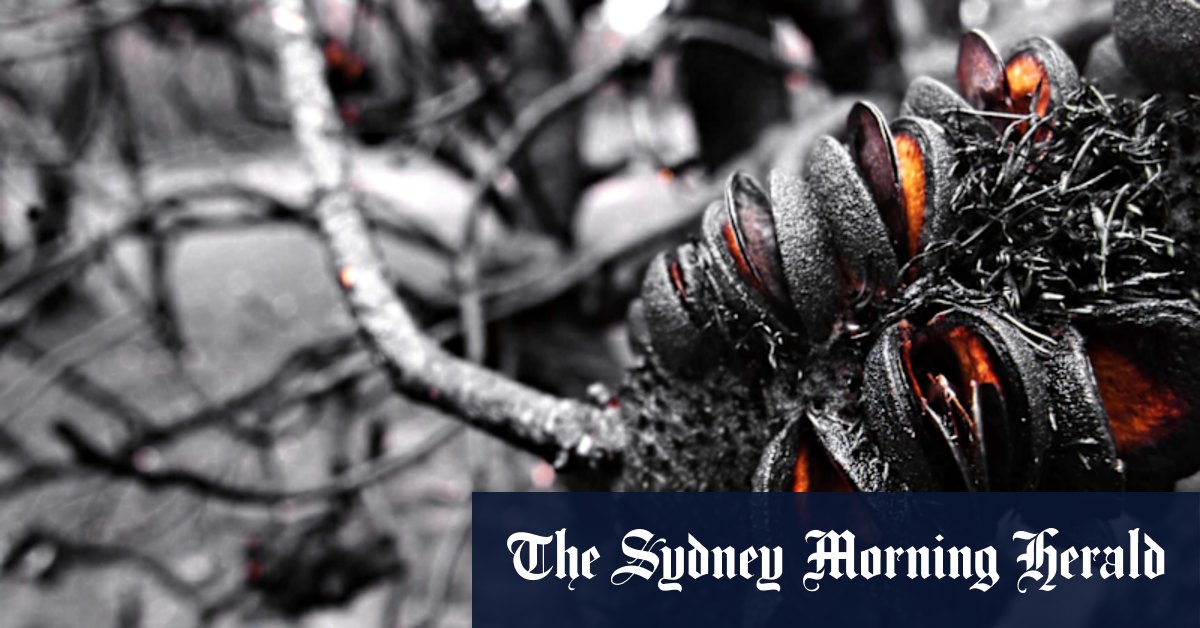
The props are banksia pods from Australia. One in every of them is bushy and closed, with the seeds nonetheless inside. The opposite is burnt and naked. It’s been subjected to a blowtorch to open the pods and extract the seeds.
Breman says Wakehurst has seeds from 190 nations and handles requests each working day to retailer or alternate seeds for tasks world wide.
“The fantastic thing about seed banking is it’s comparatively easy expertise for conserving a considerable amount of genetic range in a very small area at comparatively low value,” she says.
Among the value is in defending the seeds from the unknown. The constructing can face up to flooding and hearth and has back-up turbines in case of an influence failure. Provided that Wakehurst is simply south of Gatwick Airport, the financial institution additionally has sufficient bolstered concrete to face up to an plane catastrophe.
It’s simpler to get to, nonetheless, than an analogous venture on the island of Svalbard, within the Arctic Ocean, the place member nations deposit seeds in a vault dug into the frozen earth.
The conservation co-ordinator on the financial institution, Aisyah Faruk, works with businesses in Australia and Asia to protect species.

2019: A fireplace twister descends in the course of the Inexperienced Valley hearth in southern NSW. The seed financial institution might assist Australia get better from devastating fires sooner or later.Credit score:
“We’re coping with threats like deforestation, all the way in which to the consequences of local weather change,” she says.
“We have to work collectively to make sure the preservation of all of the crops, in addition to restoring a few of the habitats that we’ve misplaced.”
Over 25 years the financial institution has grown to almost 2.5 billion seeds from greater than 40,000 species. Some are not discovered within the wild. The important thing to saving them is dry air and chilly temperatures.
“These are the primary steps which might be going to make sure that the seed stays alive for tens to a whole lot of years,” says Breman.
Historical past reveals how lengthy seeds can final. In a single case the seed financial institution took a name from the Nationwide Archives in London after researchers discovered packets of seed within the leather-based pockets of a sailor who had been in South Africa in 1803.
The scientists germinated the seeds, and the outcome was a Leucospermum conocarpodendron, generally known as a pincushion protea. It’s now in a glasshouse at Kew.
I can really feel these components at work after I stroll down the steps to the deepest a part of the bunker. The air is dried to fifteen per cent humidity, the place Lucy Taylor, a seed curator, works at a bench, testing the seeds to make sure they’re correctly preserved.

Conservation co-ordinator Dr Aisyah Faruk (left) and Dr Elinor Breman on the Millennium Seed Financial institution.Credit score: David Crowe
The following step is to see the vault that preserves the Australian wildflower that was virtually misplaced.
The native herb with an excellent purple flower grows solely in restricted areas. It’s known as the clover glycine and was largely destroyed when the Cudlee Creek bushfire swept by way of South Australia in 2019. So many have been misplaced within the fires that Australian scientists needed to seek for seeds to propagate a brand new colony to make sure the plant survived.
Happily, the Millennium Seed Financial institution had acquired 1200 of the glycine seeds in 2007 and saved them in settlement with Australian authorities, making a reserve. When the South Australian researchers have been able to propagate new crops they turned to the seed financial institution in England.
‘We don’t know which of the species that we maintain listed here are going to be the essential ones in 10 years’ time, which is why it’s actually, actually essential to be making collections now.’
Dr Elinor Breman, Millennium Seed Financial institution
The Australian crew used the seeds from the UK to develop new crops and harvest extra seeds so they might domesticate sufficient of the native herb to revive the land. The work was extremely profitable, with a 90 per cent survival price for the crops (50 per cent is taken into account good).
Essentially the most beneficial a part of the financial institution is a storeroom close to Taylor’s bench. I’m not permitted to see it till I signal a medical waiver and placed on a cumbersome jacket and a fleecy cap to verify I live on of the sub-zero room the place a few of the seeds are stored.
Taylor opens the door to the large fridge and we stroll right into a room that’s stored at minus 20 levels. Inside minutes she selects a row in an unlimited steel submitting system and finds the drawer she needs. She brings out a small glass vial with seeds the dimensions of peppercorns. These are a few of the clover glycine. She holds them up and I take a photograph to show they’re there.
The Millennium Seed Financial institution can not retailer every thing. The lifetime of a seed will be prolonged in dry and chilly air for about 85 per cent of crops however others are thought of “recalcitrant” – the phrase utilized by the scientists – as a result of their seeds don’t reply to straightforward freezing. The recalcitrants embody the mango, the avocado and the oak tree.

King Charles displays on conservation in his dialogue with Cate Blanchett.Credit score: Getty Pictures for Royal Botanic Gardens, Kew
The Royal Botanic Gardens estimates that 45 per cent of all flowering crops are prone to extinction and says that is prone to worsen as areas grow to be hotter and drier. It makes a great case for having an insurance coverage coverage for the world’s wild crops.
I stroll out of the dry air and the deep freeze and stroll up the steps. The English autumn feels just like the tropics, heavy with humidity, after being within the vault.
I didn’t really want to see the seeds of the clover glycine, in fact. However I’ve misplaced extra native flowers than I care to confess after years of gardening. The world is turning into more and more hostile to uncommon species, and scientists on the Millennium Seed Financial institution anticipate local weather change to make their work much more needed within the years to return. So I’m glad to know there’s a back-up plan for Australian crops.
The problem is that British and Australian consultants can not know precisely which seeds ought to take precedence.
“You don’t know what you’re going to want,” says Breman.
Loading
“We don’t know which of the species that we maintain listed here are going to be the essential ones in 10 years’ time, which is why it’s actually, actually essential to be making collections now from throughout habitats that aren’t but threatened.”
Meaning 2.5 billion seeds is probably not sufficient. Happily, the frozen cabinets have room for extra.
Get a observe immediately from our overseas correspondents on what’s making headlines world wide. Sign up for our weekly What in the World newsletter.
