

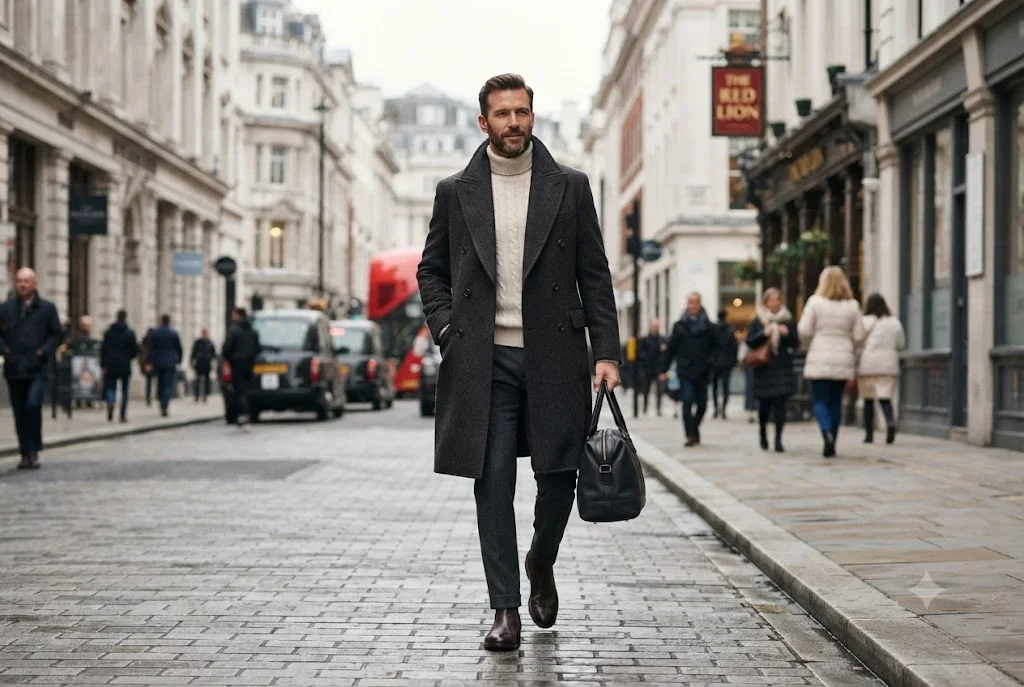
Winter coats men choose should do more than protect against cold weather. The right coat can become one of the defining pieces of a winter wardrobe, combining warmth, comfort, fit and personal style. From classic wool overcoats to modern lightweight layers, there are plenty of options for different occasions and lifestyles.
A good winter coat should also work with the rest of your wardrobe. Whether you usually wear tailoring, knitwear, denim or smart casual clothing, choosing the right silhouette and colour can make everyday winter dressing considerably easier.
Why Winter Coats Men Need Should Be Versatile
A winter coat is often worn more frequently than almost any other seasonal garment. That makes versatility especially important. Rather than choosing a coat purely because it looks impressive in a product photograph, consider how it will work with your existing clothes.
A versatile coat should comfortably layer over shirts, jumpers and jackets without restricting movement. It should also have a silhouette that works with both casual and smarter outfits.
For example, a tailored wool coat can complement a suit while also working over denim and knitwear. A more relaxed padded coat may be ideal for everyday casual dressing, commuting and outdoor activities.
How to Choose a Winter Coat for Men
When selecting a winter coat for men, begin by considering the conditions in which you are most likely to wear it. Your choice may differ if you spend most of your time commuting through a city compared with someone who regularly walks outdoors.
Pay attention to several practical factors:
- Warmth: Consider insulation, fabric weight and how much layering you normally need.
- Length: Longer coats provide greater coverage, while shorter designs can feel more casual and practical.
- Fit: Leave enough room for knitwear without making the coat look excessively large.
- Fabric: Wool offers warmth and a refined appearance, while technical fabrics can provide useful weather protection.
- Colour: Neutral shades tend to offer the greatest versatility.
- Construction: Look for useful details such as secure pockets, quality fastenings and a comfortable collar.
It is also worth considering whether the coat needs to serve one specific purpose or several. A formal overcoat may be perfect for tailoring but less suitable for casual weekends, while a versatile mid-length coat can bridge both wardrobes.
What Makes a Good Winter Coat for Men?
The good winter coat for men is usually the one that fits the wearer’s lifestyle rather than simply following a trend. Warmth, comfort and versatility should come before decorative details.
Fabric is particularly important. Wool remains popular because it offers natural warmth and a sophisticated appearance. Technical blends and insulated fabrics can be useful when weather resistance and lighter weight are priorities.
Construction matters as well. A well-designed coat should maintain its shape without feeling restrictive. Seams, buttons, zips, lining and pocket construction can all affect how the garment performs over time.
Men’s Winter Coat Styles to Consider
There is no single men’s winter coat style that suits every occasion. Different silhouettes create different levels of formality and practicality.
Wool Overcoat
A wool overcoat is one of the most timeless options. Its structured appearance makes it particularly suitable for tailoring, but a contemporary cut can also work with jeans and knitwear.
Puffer Coat
Puffer coats focus heavily on insulation and casual practicality. They can be excellent for cold everyday conditions, particularly when warmth is more important than formal styling.
Peacoat
The peacoat offers a shorter, structured silhouette with a distinctive double-breasted front. It can provide a smart appearance while remaining more casual than a long overcoat.
Parkas
Parkas generally offer generous coverage and a practical approach to winter dressing. Depending on the design, they can work well for everyday casual outfits.
Technical Winter Coats
Technical coats can be useful when protection from wind and wet conditions is a priority. They often combine lightweight materials with practical construction and insulation.
Wool Coat Long Mens Styles
A wool coat long mens silhouette can add instant sophistication to a winter outfit. Longer coats create a strong vertical line and can work particularly well with tailored trousers or suits.
Length should still be considered in relation to your height and proportions. A coat that falls well below the knee can create a dramatic appearance, while a mid-thigh or knee-length design may feel easier to wear every day.
When choosing a long wool coat, consider how much layering you expect to do underneath. A slightly relaxed shoulder and body can make the coat more practical during colder weather.
Long Wool Coat Mens Styling Ideas
The appeal of a long wool coat mens wardrobe piece is its ability to elevate relatively simple clothing. A dark wool coat can instantly make a knit jumper and trousers look more refined.
For a formal look, wear it over a tailored suit with leather shoes or boots. For a more casual outfit, combine it with dark denim, a fine-gauge jumper and understated footwear.
Colour is another useful styling tool. Charcoal, navy, camel and dark brown can all provide a sophisticated winter palette while remaining relatively easy to coordinate.
Wool Long Jacket Men’s Alternatives
A wool long jacket men’s style sits somewhere between a traditional coat and a longer casual jacket. It can be useful when you want warmth and length without the formality associated with a classic overcoat.
These designs can work particularly well with smart casual clothing. Try one over a crew-neck jumper, straight-leg trousers and leather trainers for a contemporary everyday outfit.
If you prefer a more relaxed appearance, choose softer construction and less pronounced tailoring. The result should feel polished without looking like formalwear.
Mens Wool Dress Coat for Formal Dressing
A mens wool dress coat is particularly useful for men who regularly wear tailoring during winter. Its clean silhouette can sit comfortably over a suit without disrupting the proportions of the outfit.
Choose a length that provides sufficient coverage over the jacket. A coat that is too short can leave the bottom of the suit jacket exposed, which may make the outfit look disconnected.
For maximum versatility, navy, charcoal and dark grey are dependable choices. These shades can work with multiple suit colours and are easy to integrate into an existing wardrobe.
For more inspiration on combining outerwear with tailoring, see our guide to designer suits for men.
Should You Choose a Coat Mens Fur Style?
A coat mens fur style can create a dramatic winter appearance, but practicality and personal preference should guide the choice. Fur-effect trims and textured finishes can introduce visual interest without requiring an extremely elaborate silhouette.
If you prefer a more understated wardrobe, consider a coat with a subtle textured collar or restrained trim. This can provide a distinctive finish while keeping the overall outfit sophisticated.
Always consider how the coat works with the rest of your clothing. Strong outerwear details can become the focal point, so simpler layers underneath usually create a more balanced result.
Fluffy Coat for Men: How to Style It
A fluffy coat for men can add texture and volume to a winter wardrobe. Because the fabric or finish already creates visual impact, the rest of the outfit should generally remain relatively clean.
Try a textured coat with straight-leg trousers, a plain jumper and simple footwear. Avoid adding too many oversized elements at once unless you are deliberately creating a statement silhouette.
Proportion is particularly important with fluffy outerwear. If the coat is substantial, streamlined trousers can help balance the outfit.
Mens Lightweight Coat Options
A mens lightweight coat can be valuable when temperatures fluctuate or when you need a layer that is easier to travel with. Lightweight does not necessarily mean unsuitable for winter; insulation, layering and fabric construction all influence warmth.
Lightweight coats can also be useful during milder British winters or for indoor-to-outdoor commuting. A coat that allows a jumper underneath can provide flexibility without the bulk of a heavily insulated design.
For travel, lightweight construction can be especially practical because it takes up less space and can be easier to carry when temperatures change.
Beige Coat Men Can Wear Beyond Winter
A beige coat men can wear across multiple seasons provides a softer alternative to black or charcoal. Beige works particularly well with cream, brown, navy, olive and denim.
During winter, combine a beige wool coat with darker trousers and knitwear for contrast. During transitional seasons, the same coat can work with lighter layers.
The main advantage is flexibility. Beige has enough warmth to feel seasonal while remaining neutral enough for a wide range of outfits.
Designer Coat Men Should Consider
A designer coat men choose should be evaluated on more than its label. Construction, fabric quality, fit and longevity are all important when purchasing premium outerwear.
Look closely at the silhouette. A well-designed coat should sit naturally across the shoulders and provide enough room for layering. The fabric should also complement the intended use of the garment.
If you want a coat to remain useful for several winters, classic construction and versatile colouring can be more valuable than highly seasonal detailing.
Mens Navy Coat Styling Guide
A mens navy coat is one of the most versatile choices available. Navy can look formal enough for tailoring while remaining relaxed enough for everyday clothing.
Wear a navy wool coat over a grey suit for a sophisticated business combination. Alternatively, pair it with dark denim, a cream jumper and brown or black footwear for a more casual outfit.
Navy also works particularly well with other classic menswear colours, including grey, white, cream, brown and burgundy.
Male Overcoat vs Shorter Winter Jackets
A male overcoat generally provides more coverage and creates a more formal silhouette than a shorter jacket. It is therefore particularly useful for men who wear suits or smart casual clothing during winter.
Shorter jackets, by contrast, can be more practical for active everyday use. They are easier to move in and often create a more casual appearance.
The choice comes down to your lifestyle. If you spend much of the day in tailored clothing, an overcoat may offer greater versatility. If you prioritise mobility and casual outfits, a shorter winter coat may be more useful.
Mens Long Overcoat Styling
A mens long overcoat creates a distinctive silhouette and can make even simple winter outfits appear more intentional. It works especially well when the rest of the outfit has clean proportions.
For a refined look, combine a long overcoat with tailored trousers, a fine knit and leather shoes. For a contemporary casual approach, try straight-leg denim, a crew-neck jumper and understated boots.
Long coats can also work well with layered outfits. For example, a collared shirt beneath knitwear can provide a subtle contrast around the neckline while the coat adds the final layer of structure.
How to Choose the Right Coat Length
Coat length influences both appearance and practicality. Shorter coats usually feel more casual, while longer designs tend to look more sophisticated.
- Hip length: Practical and casual, especially for everyday wear.
- Mid-thigh: A versatile middle ground for smart and casual outfits.
- Knee length: Particularly effective with tailoring and traditional wool coats.
- Below the knee: More dramatic and fashion-led, with excellent coverage.
Consider your usual trousers and footwear when choosing length. A longer coat can work particularly well with tailored trousers and boots, while shorter coats often complement jeans and casual footwear.
How to Layer Under a Winter Coat
Good winter dressing is not only about the coat itself. The layers underneath determine comfort, warmth and the overall appearance of the outfit.
A simple combination might include a shirt, lightweight knitwear and a wool coat. On colder days, a heavier jumper can replace the lighter knit, provided the outer coat has enough room.
Avoid forcing too many bulky layers underneath a fitted coat. If you regularly wear chunky knitwear, choose a coat with a slightly more generous cut.
Winter Coat Colours That Are Easy to Wear
Neutral colours provide the strongest foundation for a versatile winter wardrobe.
- Navy: Smart, versatile and easy to pair with tailoring.
- Charcoal: Sophisticated and particularly useful with formal clothing.
- Black: Clean and modern, especially for evening outfits.
- Beige: Softer and warmer, with strong seasonal versatility.
- Brown: Adds warmth and works well with textured winter clothing.
- Olive: A practical alternative to traditional neutrals for casual outerwear.
How to Build a Practical Winter Outerwear Wardrobe
You do not need several expensive coats to create a useful winter wardrobe. Instead, consider owning pieces with different purposes.
A long wool coat can cover formal occasions and smart casual outfits. A practical lightweight or insulated coat can handle everyday conditions, while a shorter casual jacket can provide variety.
Think about your lifestyle before adding another coat. If most of your wardrobe consists of tailoring, prioritise an overcoat. If you primarily wear casual clothing, a practical mid-length coat may provide greater value.
Final Thoughts
Winter coats men choose should combine practical protection with a silhouette that complements their personal style. From wool overcoats and dress coats to lightweight, fluffy and designer options, the right outerwear can transform an entire winter wardrobe.
Focus on fit, fabric, length and versatility before worrying about trends. A well-chosen navy, charcoal, beige or wool coat can remain useful across multiple seasons and work with everything from knitwear and denim to tailored clothing.
Ultimately, the best winter coat is one that you enjoy wearing regularly. When warmth, comfort and style work together, outerwear becomes a reliable part of a well-built men’s wardrobe rather than simply another seasonal purchase.
“`
