

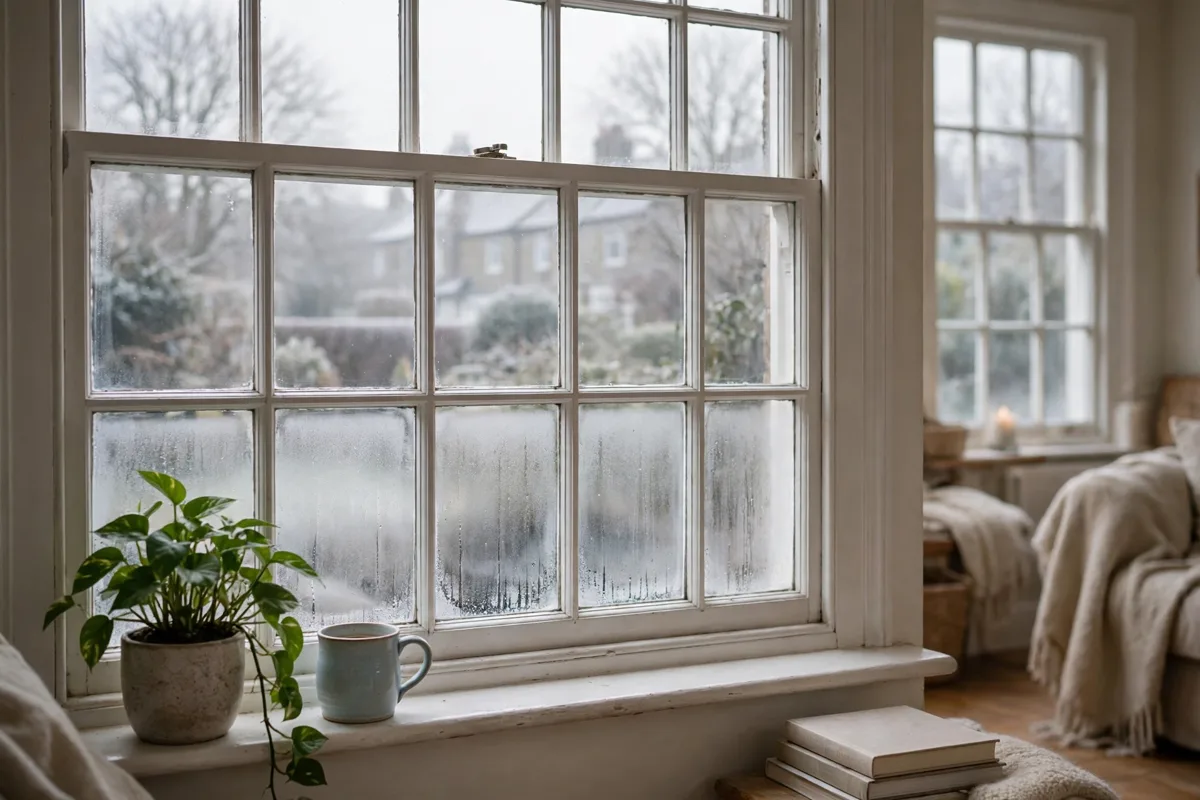
Waking up to streaming windows is one of the most common winter annoyances in British homes, and it is usually a sign of too much moisture in the air rather than a fault with the glass. Learning how to stop condensation on windows matters because the water that runs down the pane does not stay there: it soaks into frames, lifts paint, stains curtains and, left alone, feeds the black mould that appears in corners and behind furniture. The good news is that most condensation is beaten with ventilation, steadier heating and a few small changes to everyday habits, none of which cost much.
Why Condensation Forms in the First Place
Warm air holds more moisture than cold air. When the warm, damp air inside your home meets the coldest surface in the room — usually the window glass — it cools, can no longer hold its moisture, and deposits it as water droplets. Everyday activities load the air with surprising amounts of water vapour: cooking, showering, bathing, drying clothes indoors and even breathing overnight in a closed bedroom. In winter the problem peaks because windows stay shut, heating cycles on and off, and the glass is at its coldest. Stopping condensation is therefore mostly about removing moisture, keeping surfaces warmer, or both.
Ventilate a Little, Every Day
The single most effective answer to how to stop condensation on windows is also the simplest: let the damp air out. Open windows on opposite sides of the house for ten to fifteen minutes each morning and the whole air volume changes, taking the overnight moisture with it. It feels counterproductive in cold weather, but a short, sharp airing loses far less heat than hours of a window cracked open, because walls and furniture stay warm and reheat the fresh air quickly.
Use the extractor fan every time you cook or shower, and leave it running for fifteen to twenty minutes afterwards; most fans have a timer or humidistat for exactly this. If your windows have trickle vents, keep them open — they are designed to provide background ventilation without a draught. In bedrooms, leaving the door slightly ajar overnight spreads the moisture load across the house instead of concentrating it on one cold window.
Cut Moisture at the Source
Ventilation works much better when less moisture is produced in the first place. Put lids on pans and keep the kitchen door closed while cooking so steam does not drift through the house. Dry clothes outdoors whenever the weather allows; if they must come inside, use one room with the window open or the extractor on, and close the door to the rest of the house. A heated airer in a ventilated room is far kinder to your windows than radiators loaded with wet laundry in every room. In the bathroom, a quick squeegee of the shower screen and tiles after use sends a surprising amount of water down the drain instead of into the air.
Keep Heating Steady and Surfaces Warmer
Condensation loves temperature swings. Homes heated in short, hot bursts and then left to go cold give moisture plenty of cold surfaces to settle on. A lower, steadier background heat keeps wall and glass temperatures closer to the air temperature, which makes condensation much less likely to form. Avoid placing large furniture tight against external walls, especially in bedrooms; air trapped behind a wardrobe cools, and that is exactly where mould quietly takes hold. Leave a small gap so air can circulate.
If one room is always worst — often a north-facing bedroom — a small, portable dehumidifier can be a practical stopgap while you improve ventilation. Refrigerant models work best in heated rooms; desiccant models cope better in cooler spaces. Whichever you choose, it treats the symptom, so pair it with the airing habits above rather than relying on it alone.
Quick Daily Habits That Make the Difference
A few thirty-second habits keep on top of whatever moisture remains. Wipe down bedroom windows each morning with a cloth or window vac before the water runs onto the sill; this alone prevents most paint and seal damage. Check the silicone seals around panes and frames each autumn, because perished seals let cold air cool the glass edge further. If you are planning decorating or improvement work anyway, the projects in our DIY home hacks collection are a good moment to improve insulation and ventilation together rather than treating each room in isolation.
Homeowners who let a property should take condensation seriously too, because tenants often report it as damp; our guide to renting out your first property covers the maintenance basics that keep a rental in good shape through winter. And if you are renovating a cold room, projects such as DIY wall panelling are worth pairing with proper insulation behind the boards, so the finished wall is warmer as well as smarter.
When Condensation Points to a Bigger Problem
Moisture between the panes of a double-glazed unit means the sealed unit has failed and the glass needs replacing; no amount of ventilation will clear it. Persistent wet patches on walls away from windows, tide marks, or a musty smell that survives good airing can indicate penetrating or rising damp rather than condensation, and those need a proper damp survey rather than home remedies. Likewise, if mould keeps returning in one spot despite steady heating and daily airing, look for a cold bridge or a hidden leak behind the surface.
A Simple Room-by-Room Checklist
If you want the routine in one place, work through the rooms in this order. In the kitchen: lids on pans, extractor on while cooking and for twenty minutes after, and the door kept shut against the rest of the house. In the bathroom: extractor or an open window during every shower, a squeegee over tiles and screen afterwards, and wet towels hung where air can reach them. In bedrooms: a short airing each morning, trickle vents open, wardrobes pulled a few centimetres off external walls, and window panes wiped before the water reaches the sill. In living rooms: avoid drying laundry there if you can, and if you cannot, keep it to one ventilated spot rather than spreading it across every radiator. Ten minutes of this routine a day does more than any single gadget.
Final Thoughts
To stop condensation on windows, think like the moisture: it is made indoors, it travels on warm air, and it settles on the coldest surface it can find. Air the house briefly every day, use extractors properly, dry clothes in one ventilated room, keep heating steady, and wipe down morning windows before the water spreads. Follow that routine for a couple of weeks and most homes see the streaming glass, damp sills and corner mould fade away — with no specialist kit and no major spend required.

1 Comment
Pingback: How to Choose a Laptop for Working from Home: A Practical Guide - Charles Campbell