

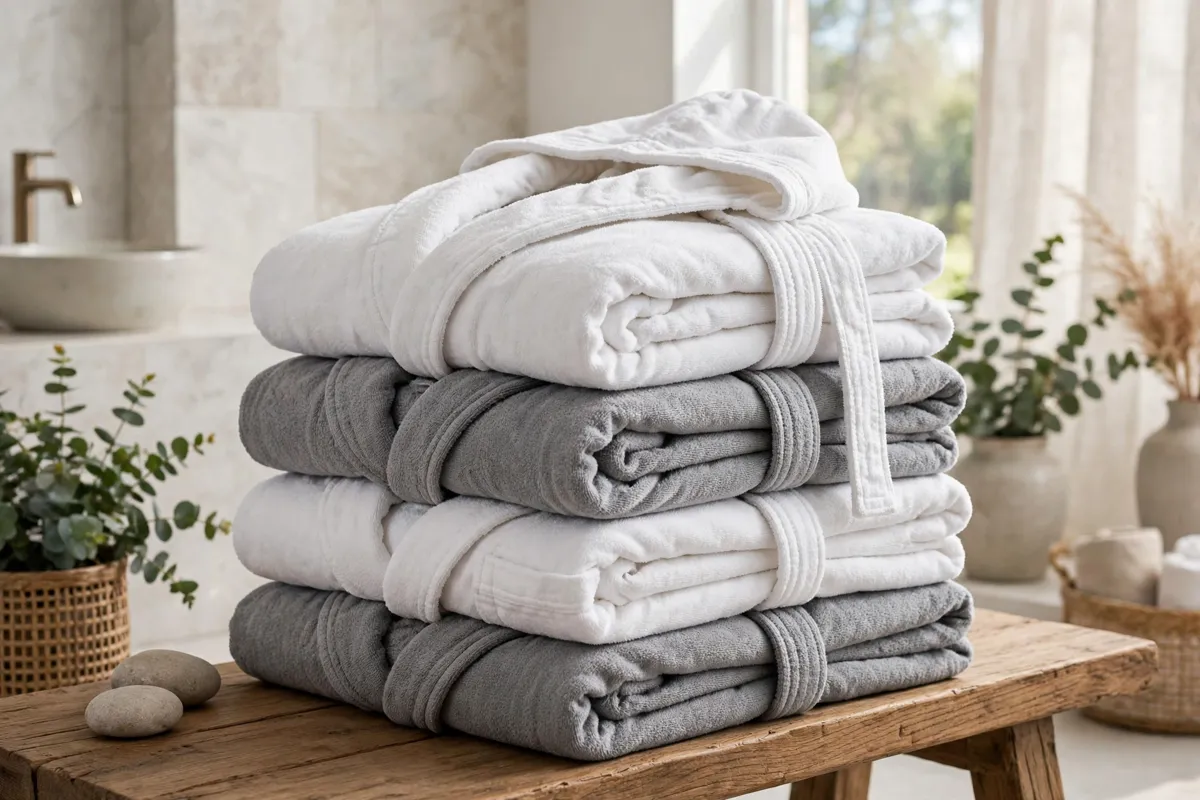
A good mens robe is one of the most underrated items in a man’s wardrobe. It is the first thing you reach for on a cold morning, the last thing you wear at night, and the piece that makes a hotel room or a lazy Sunday feel that bit more comfortable. Yet most men buy a robe as an afterthought, grabbing whatever is on offer, and then wonder why it never feels quite right. This guide explains the fabrics, fits and styles that matter, so you can choose a robe or bathrobe you will actually enjoy wearing.
Robes, Bathrobes and Dressing Gowns: What Is the Difference?
The words get used interchangeably, but there are useful distinctions. A bathrobe is designed for after a bath or shower: it is usually made from towelling or waffle cotton, absorbs moisture, and is worn for a short while before dressing. A dressing gown is typically lighter and worn around the house in the morning or evening, often in cotton, flannel or jersey. A robe is the broader term that covers both, and in practice most retailers label their whole range as robes or bathrobes regardless of weight.
What matters more than the label is the job you want it to do. If you want something to throw on straight out of the shower, absorbency comes first and towelling wins. If you want warmth on winter mornings, a fleece or flannel gown is the better pick. If you want something light for summer or for travel, a cotton waffle or seersucker robe packs small and dries quickly. Buying with the use in mind is the simplest way to avoid a robe that hangs unworn behind the door.
Fabrics That Matter
Cotton Towelling
Towelling cotton is the classic bathrobe fabric for good reason: it absorbs water well, feels soft against skin, and survives frequent washing. Look for a decent weight rather than the thinnest option; a robe that is too light will not dry you properly, while a very heavy one takes ages to dry between uses. Towelling robes suit bathrooms and post-swim use, and they are the natural partner to the rest of your bathroom routine.
Waffle Cotton
Waffle weave cotton is lighter than towelling, dries faster, and packs down smaller, which makes it the best choice for travel or for warmer houses. It absorbs less than towelling, so it is better as a lounging robe than a straight-out-of-the-shower one. Many hotels use waffle robes for exactly this reason: they feel fresh, look smart, and do not weigh much.
Fleece and Flannel
For warmth, nothing beats fleece or brushed flannel. A fleece robe is the winter-morning answer, especially in a cold house, while flannel offers a similar warmth with a more traditional feel. Both are less absorbent, so they are dressing gowns rather than bathrobes in the strict sense, but for comfort around the house they are hard to beat. Pair a fleece robe with a crew neck jumper and you have a cold-weather lounging combination that actually works.
Silk and Satin
Silk and satin robes are about luxury rather than practicality. They feel wonderful and look sharp, but they absorb nothing and need careful washing. They suit warm evenings and special occasions rather than daily use. If you like the look but not the upkeep, a cotton-satin blend gives some of the sheen with easier care.
Fit, Length and Details
Fit matters more with a robe than most men expect. Too short and it feels like a jacket; too long and it trips you on the stairs. Knee length is the most versatile choice for most men, while mid-calf suits taller men and colder houses. The robe should wrap comfortably across the front with enough overlap to stay closed when you move, and the belt should sit at your natural waist rather than slipping down.
Sleeves should reach your wrists without covering your hands, and the shoulders should sit where your own shoulders sit, not droop halfway down your arm. Pockets are worth having: at least one deep pocket for a phone, and ideally two. A hanging loop inside the neck is a small detail that makes storage much easier. If you wear your robe over nightwear, consider how it layers: a robe that fits over everyday underwear and a tee is different from one worn over pyjamas, so try it with what you actually wear at home.
For a complete home-comfort wardrobe, it helps to think of the robe as part of a set rather than a single purchase. Our guides to trunks for men and different types of underwear for guys cover the base layers, while printed tees and lightweight hoodies round out relaxed at-home dressing.
How to Care for a Robe
Most cotton robes wash well at a normal cycle, but a few habits keep them in good shape. Wash a new towelling robe once before wearing it to remove loose fibres, avoid fabric softener on towelling because it reduces absorbency, and dry naturally where possible rather than on high heat. Fleece robes should be washed inside out to reduce bobbling, and silk or satin robes belong on a gentle cycle or with the dry cleaner.
Replace a robe when the fabric thins, the belt frays beyond repair, or it no longer dries you properly. A good cotton robe should last several years of regular use, and a fleece gown often longer, so spending a little more on fabric quality pays off over time.
Choosing the Right Robe for You
Start with the use: post-shower drying, winter warmth, summer lounging, or travel. Then pick the fabric that matches, choose knee length unless you have a reason to go longer, and check the belt, pockets and sleeve length before buying. Try it over what you normally wear at home, not over shop clothes, and remember that a robe should feel like a small daily luxury, not a compromise.
The right robe will not transform your life, but it will improve a hundred small moments: cold mornings, slow weekends, and the first hour after a long day. Given how often you will wear it, it deserves the same thought you would give to any other wardrobe staple, and this guide should make that choice a straightforward one.
