

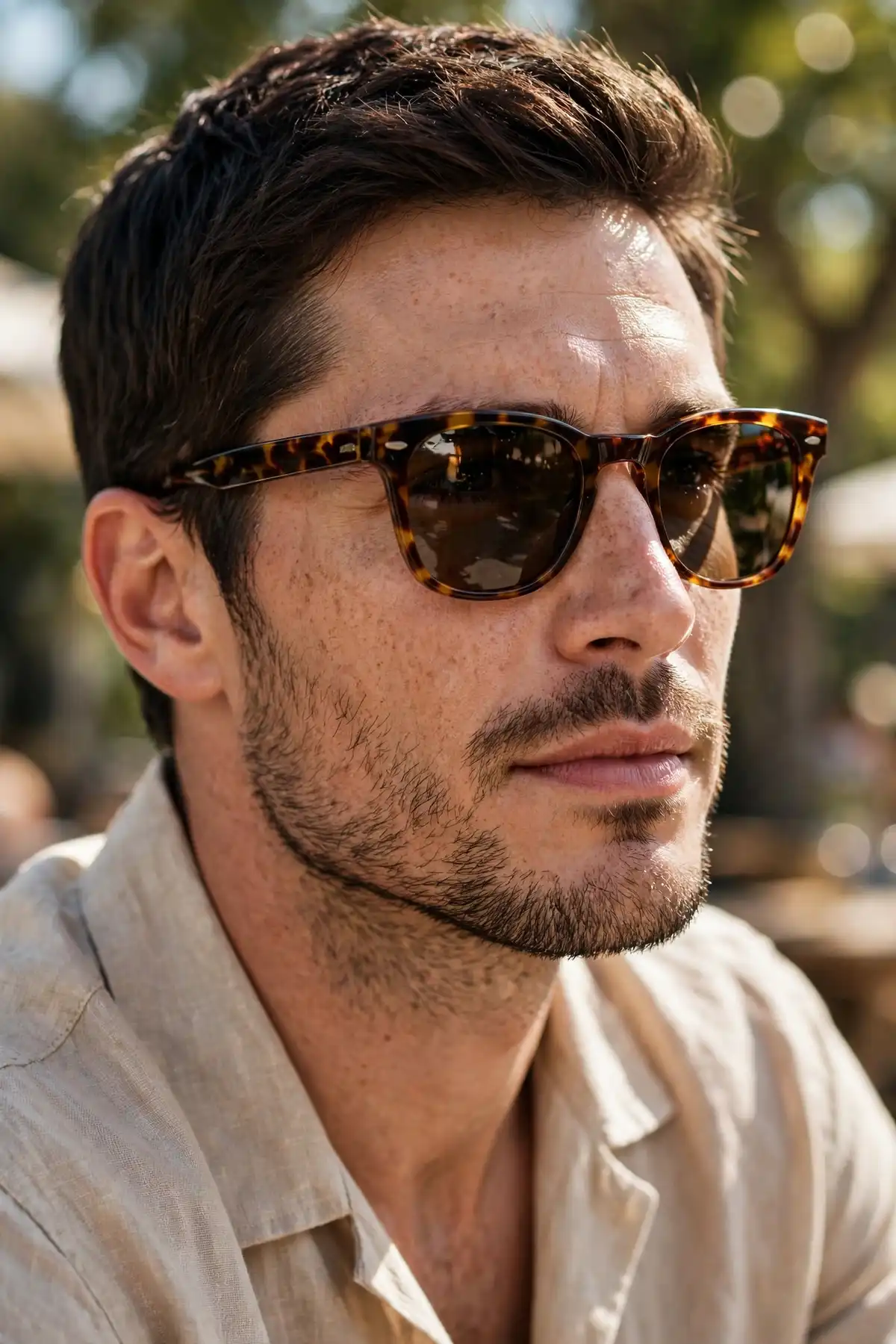
A good pair of sunglasses does three jobs at once: it protects your eyes, sharpens your outfit and saves you from squinting through every photograph. Yet many men buy sunglasses for men the wrong way round — choosing a style they admire on someone else, then wondering why it never quite works on them. The secret is to start with your own face, not the display stand. This guide explains how to match frames to your face shape, what lens options actually matter, and how to get a fit that stays comfortable from a summer wedding to a winter-sun holiday.
Start with Your Face Shape
Almost every face falls into one of five broad shapes, and each has frames that flatter it. Oval faces are the luckiest: balanced proportions suit most styles, from aviators to square frames, provided the frame is not wider than the face itself. Round faces benefit from contrast — angular, rectangular frames add definition, while round lenses only emphasise softness. Square faces, with a strong jaw and broad forehead, work in the opposite direction: rounded or oval frames soften the angles. Heart-shaped faces, wider at the forehead and narrower at the chin, suit frames that are slightly wider at the bottom or lighter in colour. Oblong faces look best with taller lenses and decorative temples that add width. Stand in front of a mirror, trace your outline, and be honest about which description fits — the right category makes every later choice easier.
Frame Styles Explained
Aviator sunglasses, with their thin metal frames and teardrop lenses, began as pilot eyewear and remain the most versatile classic, suiting oval, square and heart-shaped faces particularly well. Square-framed styles in acetate — the shape popularised in the 1950s — add structure to round and oval faces and pair naturally with tailoring. Round frames carry a relaxed, creative feel and flatter square and oblong faces, though they demand confidence. Browline frames, heavier across the top, echo the brow and suit men who wear their sunglasses with smarter clothing. Sportier wraparound styles belong with active wear; if that is your world, our guide to men’s sportswear and activewear shows how to build the rest of the kit around them. Whatever the style, choose a frame width that matches your face: the lenses should not extend far beyond your temples.
Lenses: UV Protection, Polarisation and Tints
Looks matter, but protection matters more. Sunglasses sold in the UK should carry UV400 protection, which blocks UVA and UVB rays; check for the CE or UKCA mark rather than trusting a dark tint, because darkness alone says nothing about UV filtering. Polarised lenses add a filter that cuts glare from water, roads and wet pavements — a genuine benefit for driving, fishing and holidays, though they can make some digital screens harder to read. Tint colours are partly preference and partly function: grey lenses keep colours true, brown and amber lenses boost contrast on changeable days, and green lenses balance both. Mirrored finishes reduce glare further and hide the eyes completely, which some men love and others find too bold for formal settings. If you wear prescription glasses, most of these options are available with corrective lenses, or you can choose clip-on and over-glasses designs for occasional use.
Fit and Comfort: Getting the Size Right
Most frames are marked with three measurements inside the temple arm: lens width, bridge width and arm length, in millimetres. You do not need to memorise them, but two checks make all the difference. First, the frames should rest on your nose without pinching or sliding — if they slip every time you look down, the bridge is too wide or needs adjustable pads. Second, the arms should reach your ears with a gentle curve, not squeeze your head or float loosely. Sunglasses that are too tight cause headaches within an hour; too loose and you will lose them to the sea on the first boat trip. Buy from sellers with a fair returns policy, try them for a full day indoors if you can, and remember that quality acetate frames can often be adjusted by an optician for a small fee. Comfort is not a luxury in eyewear — it decides whether you actually wear the protection you bought.
Styling Sunglasses with Your Wardrobe
The easiest way to look deliberate is to match the formality of the frame to the formality of the outfit. Classic metal aviators and neat acetate frames sit comfortably with tailoring, which is why they work so well at summer weddings — our guide to summer wedding suits for men covers the outfits they will accompany. With casual summer clothing, chunkier frames hold their own; pair them using the combinations in our guide to men’s shorts and T-shirts. Accessories should talk to each other quietly rather than compete: a leather-strapped watch, a simple belt and well-chosen sunglasses beat a pile of statement pieces. For a complete accessories refresh, see our guide to men’s designer bags. And when the temperature drops, remember that low winter sun is still bright — your shades belong in the coat pocket next to your men’s beanie and your scarf, not in a drawer until June.
Budget or Premium: What the Money Buys
Price alone does not guarantee protection — inexpensive sunglasses with proper UV400 lenses protect your eyes just as effectively as designer ones. What extra money usually buys is build quality: smoother hinges that survive years of folding, acetate that holds its shape and adjustment, lenses with better optical clarity and coatings, and a fit and finish that feels considered rather than moulded. If you wear sunglasses daily or drive long distances, that durability is worth paying for. If you need a spare pair for the beach bag or the festival field, a modest pair with verified UV protection is the sensible buy — and far better than an expensive-looking pair with no protection at all.
Looking After Your Sunglasses
Even the best frames fail early if they live loose in a gym bag. Keep them in a hard case, clean the lenses with a microfibre cloth rather than your shirt hem, and rinse off salt water after beach days before it attacks hinges and coatings. Never leave sunglasses on a car dashboard in summer heat, which can warp acetate, and rest them folded on a surface rather than lens-down. Do those simple things and a well-made pair will serve you for years — and you will reach for it every time the sun appears, which is rather the point.
